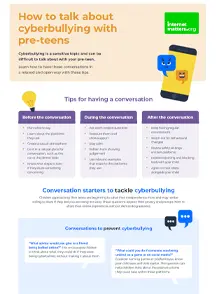
How to talk about cyberbullying with pre-teens
Conversation tips & starters for parents
Learn how to talk about cyberbullying with your pre-teen (aged 11-13) to prevent and deal with bullying behaviours online.

Quick tips
Follow these quick tips to have a conversation about cyberbullying with pre-teens.
Talk somewhere neutral
One-off face-to-face conversations can ring alarm bells, so talk while out driving, over dinner or while out for a walk.
Stay calm
If your child is a target or has bullied someone else, stay calm. Ask questions and get all necessary information before acting.
Check in regularly
If bullying happens, make sure to report and deal with it, and then make sure to follow up and check-in regularly.
In this guide
Scroll through the full guide or select a section to jump to and explore below.
Before the conversation
Children starting secondary school are likely to socialise more online than at primary school. As such, the likelihood of exposure to cyberbullying increases.
While talking about cyberbullying with pre-teens can feel difficult, preparation before the conversation can help it feel natural and more productive. Use the tips below to help.
- Plan what to say: Think about the points you want to cover in the conversation. This will help you focus and reduce the chances of reacting emotionally.
- Research platforms: Pre-teens use a wide range of apps and games to socialise with others. Knowing the platforms they use can help you align the conversation to their interests, making it more relevant to them. You’ll also feel better prepared to address specific issues.
- Choose the right time and place: Have the conversation in a neutral setting where a conversation feels natural, such as at the dinner table or in the car. This can help make these chats feel more casual and less like an interrogation.
- Know what to do: Consider the next steps you can take if you discover your child has been exposed to bullying behaviours. Check how to use blocking and reporting tools on platforms they use. If necessary, know who to contact if you need to take things further, such as your child’s school or the police.
During the conversation
Once you feel prepared, use the following tips to have effective conversations about cyberbullying.
Asking open-ended questions gives your child the opportunity to expand on their experiences, rather than replying with yes or no answers. For example, asking “How do you feel when someone is mean online?” is a more effective question than “Do you feel sad when someone is mean online?”
Conversations about cyberbullying can sometimes lead to a lot of big emotions from anger to sadness to anxiety. So, it’s important to stay calm to help the conversation remain on track and purposeful.
Your child will match your energy, so approaching anything they say with calm can help them continue to share confidently. This can also show them that you’re there to support them, not judge or get angry.
When talking about cyberbullying, try to relate it to your child’s favourite platforms or friendship group. This makes the discussion less abstract and more relevant to them. And showing understanding of what their experiences might be can encourage them to open up.
For tips on what you can say to start the conversation, read our guide below.
After the conversation
Once you’ve had the first conversation, encourage your child to continue talking with you about issues they face online.
Continue checking in with your child. Ask them how they’re feeling, especially after a cyberbullying incident is resolved. Even if they haven’t experienced cyberbullying, continuing to ask about their experiences can make it more likely they’ll share any future issues with you.
Keep an eye on your child’s behaviour. If they become stressed after using devices, use their devices less often or become socially withdrawn, it could be a sign that they are experiencing an issue like cyberbullying. Learn more about signs here.
- Show your child how to use the reporting and blocking features on the platforms they use.
- Setting parental controls on their accounts can also prevent unwanted contact.
- Monitoring apps can also give you an insight into your child’s online experience and will send alerts if they receive harmful messages, although you should be open with your child about placing these on their devices.
- Additionally, professional support can be found at Childline.
With your pre-teen, discuss what steps you’ll take if they experience bullying or target someone else online. Making these decisions together can help your child feel heard during a potentially vulnerable time.
Next steps can include:
- saving evidence of cyberbullying
- blocking and reporting a cyberbully
- talking to your child’s school if the bullying involves a classmate
- supervising their screen time
- in extreme cases, contacting the police.
Refrain from restricting their access to their devices, particularly if they’re a victim of cyberbullying, as this can increase feelings of loneliness.
How to start conversations about cyberbullying
For examples on how you can start a conversation about cyberbullying with your pre-teen, explore the guide below.