
The internet is a powerful tool for social connection, friendship and community. However, like any shared space, it can also be misused by people who exploit its social features to target vulnerable individuals, including children. One emerging threat that parents should be aware of is 764.
764 is an international network of online predators. They target, manipulate and groom children into producing child sexual abuse material (CSAM) and conducting self-harm and acts of violence.
This article explains what 764 is, how kids may be drawn into it, warning signs you should look out for and what you can do to protect your child.
Summary
- 764 is a growing online network of international predators who coerce vulnerable individuals, including children, into acts of harm. >
- Generally, individuals involved in 764 are not pursuing a political or ideological goal. Instead, they are fascinated by violence and cruelty and use shock value to gain social status and notoriety. >
- Children are often targeted by 764 in popular online communities. This includes online gaming spaces and mainstream social media platforms. Interactions are then moved to more private channels. >
- No single sign proves that a child is being victimised by 764. Instead, look out for a cluster of changes in your child, including secrecy around their online activities and a fixation on their devices. >
- Protecting your child starts with creating a safe space where open conversations about their online lives are encouraged. They should feel comfortable coming to you when something is wrong. >
What is 764?
764 is a loosely connected, international network of online groups that target and coerce vulnerable individuals – often children – into producing child sexual abuse material (CSAM) and engaging in acts of harm to themselves or others. The network also glorifies violence, celebrating notorious killers and terrorists. Members themselves have also attempted murder, plotted mass-casualty attacks and driven victims to suicide.
The Com network
764 does not exist in isolation. It’s part of a wider online culture where some groups treat extreme violence as entertainment or a way to gain attention and status. The term ‘764 network’ often describes a collection of related groups that operate under different names within this wider online ecosystem. This is often referred to broadly as the ‘Com Network’.
This network poses a growing challenge for law enforcement worldwide, with more than 200 arrests linked to it. Multiple agencies, including the National Crime Agency, have issued warnings about the threat.

Why people participate in 764
Participants in the 764 network are often fascinated by violence for its own sake. They engage in acts of cruelty to demonstrate their control over others and gain social status online.
Unlike extremist groups like ISIS or white supremacists, who believe that their violence is morally justified or in service of an ideology, 764 participants are acutely aware that what they are doing is morally objectionable. This is the point of their behaviour. The shock, transgression and harm itself are what generate status within these communities. As such, attempting to counter the ‘beliefs’ of these individuals, such as by challenging their ideology, is often ineffective.
How and where are children targeted?
Research from the Institute for Strategic Dialogue shows that the 764 network methodically targets individuals who they believe will be most susceptible to manipulation, threats and blackmail such as children and teenagers. This also includes those who have shown signs of vulnerability, such as neurodivergence, social isolation or engagement in self-harm, eating disorders and other mental health struggles.
Commonly used platforms
There is no single online space or platform that is uniquely responsible for 764 activity. However, our analysis has identified Discord, Roblox, and Telegram as common environments for grooming and exploitation. It’s important to note, though, that all three are used for otherwise non-harmful activities.
Additionally, predators within this network use other large mainstream platforms and games as ‘hunting grounds’ for potential targets. These platforms include X, Instagram, Reddit, TikTok, YouTube, Minecraft and Fortnite, among others. They often cast a wide net in initiating contact with users on these platforms.
Perpetrators will scour their public profiles and messages for clues that they may be especially vulnerable to manipulation.
Commonly used tactics
764 uses a variety of tactics to exploit children. Members of the network have even written guidebooks outlining these techniques. One common approach is ‘catfishing’. This is where offenders establish fake personas, initiate contact with a seemingly vulnerable individual and pose as an empathetic friend or romantic interest.
After establishing trust, they may attempt to move the conversation to a more private platform. This is often, but not always, Discord or Telegram. Here, they extract sensitive information from the victim, such as nudes or identifying details. At this point, the relationship can become controlling. Predators use blackmail – such as by threatening to share nude images with the child’s friends, family or school – to coerce them into acts of harm.

What are the warning signs?
No single indicator proves that a child is involved with 764. Instead, parents should watch for a cluster of behavioural, emotional and physical changes, especially if they appear suddenly or accelerate within a short period of time.
The following is a non-exhaustive list of signs that our analysis has found to be common in these cases. However, while these signs are important to be aware of, they do not necessarily mean a young person has engaged in harmful activity or is a risk to themselves or others.
- Unusual secrecy around their online activity (e.g., creating new accounts, deleting messages or adopting new privacy measures, being cautious not to leave a device unattended).
- Sudden or secretive use of new messaging platforms – particularly encrypted or invite-only apps like Telegram. Or dramatic shifts in the nature of use of platforms like Discord — for example, secretive engagement in private servers.
- Obsessive use of digital devices.
- Social withdrawal, irritability, anxiety, paranoia, mood swings or other signs of emotional distress.
- Changes in eating or sleeping patterns.
- Substance abuse.
- Distancing from longstanding peer groups and prioritising new online contacts or ‘friends’.
- Mention of threats, doxxing, swatting or indications that someone may be able to blackmail them.
- Fresh injuries such as cuts, scratches, bruises, burns or other wounds. They might specifically appear in unusual patterns or depict symbols, words or names.
- Shifts in appearance or clothing, such as wearing long sleeves or pants in hot weather to disguise self-harm.
- Unexplained gifts, which can be physical or digital (e.g., gaming currencies such as ‘Robux’ on Roblox).
- Signs of physical harm or behavioural changes in pets, such as being suddenly avoidant or fearful of a child.
How to protect your child
Regular conversation
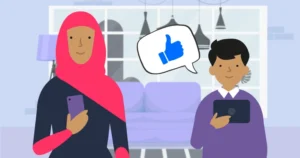
Protecting your child from the 764 network starts with creating an environment for open, regular dialogue about their online activity. It’s a space where they feel safe to engage in these discussions without fear of shame or punishment. You want your child to believe that if anything goes wrong online, they can seek support from you. Tell this to your child clearly and repeatedly to develop a sense of trust and safety.
Build digital resilience
It is also helpful to teach your child about basic online safety. Like we give children offline safety tips, such as not getting into a stranger’s car, we can share simple tips for them to follow in their online lives.
Teach them to be cautious of online strangers, especially if someone asks them for sensitive information or to move to a different platform. Encourage them to immediately report any suspicious interactions to a trusted adult. Your child must also understand that they do not need to reply to strangers; they can block and report anyone who they think is harmful.
Agree on boundaries
Instituting some practical and preventative boundaries can also help keep your child safe. This can include limiting screen time, keeping devices in shared spaces overnight, maintaining awareness about what apps they’re using and using device or app-level parental controls where appropriate.
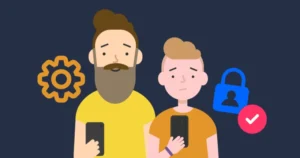
Strengthening privacy settings is also essential. This includes keeping accounts private and not sharing identifying information, disabling location services and using strong passwords and two-factor authentication. Most importantly, try to stay aware of their online activities in a calm and curious manner so that it feels more like support than surveillance.
Find the right support
If you suspect your child has been harmed by 764 – or has been coerced into harming others – reassure them that they are not in trouble. Tell them that your priority is to keep them safe. Have them stop any contact with their abusers and remove any opportunities for further communication.
Importantly, do not delete messages, images or online accounts, as these can be critical for police investigations. These cases often involve complex victim-perpetrator dynamics. This means that a child who has caused harm may have also been groomed, coerced or manipulated into doing so. As such, it’s essential to engage trained professionals including law enforcement, child protection organisations and mental health providers.
Organisations in the UK
In the UK, you can seek support from the following organisations:
- NSPCC: Find support and advice or report a child who you think might be harmed.
- Childline: Your child can talk with counsellors for 1-2-1 support if they’re less comfortable sharing with you.
- CEOP: Report online sexual abuse or other harmful online communication.
- Internet Watch Foundation: Report suspected child sexual abuse images or videos, including AI-generated, drawn or ‘fake’ content.
- The Cyber Helpline: Find advice on supporting your family’s cyber safety.
- Papyrus UK: Get mental health support for yourself or a young person in your life.
- Samaritans: A mental health helpline that you can use and make your child aware of if they struggle.
Ultimately, the most effective protection involves supportive parental involvement, early action and a safe environment where your child knows they can approach you without judgement.