

As parents, we’ve all been there: you finally sit down for a family movie night, only for the film you’ve chosen to suddenly feel much more ‘grown-up’ than you expected. We’ve all got our own techniques for navigating those awkward moments. But there’s one surefire way to avoid them all together, and ensure you pick the right content for your family.
In this article
- What is the BBFC?
- Why should I trust the BBFC?
- Which streaming services use BBFC age ratings?
- 3 quick tips for safer streaming
- Supporting resources
In the world of streaming, age ratings vary across platforms. Some services classify their own content, which doesn’t always align with the expectations of UK audiences.
The BBFC works differently. As the UK’s independent film and video regulator, we base our ratings on feedback from families across the country and what they consider appropriate for children as they grow.. These views shape our Classification Guidelines and, consequently, our ratings.
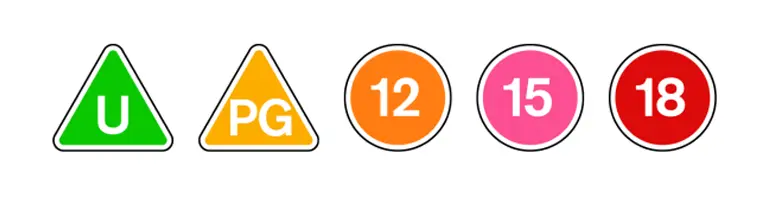
Research shows that nearly everyone in the UK recognises the BBFC’s iconic age rating symbols. From the cinema, from DVD or Blu-ray packaging and, increasingly, from streaming services.
What is the BBFC?
The BBFC is the British Board of Film Classification. We’ve been classifying films for release in UK cinemas for over a century. Additionally, we’ve been responsible for classifying content released on physical media formats from the days of VHS tapes to the modern era of 4K Ultra HD Blu-ray.
Our core mission remains to help UK audiences, particularly children and families, make informed decisions about what is right for them and avoid what is not. As such, we currently work with over two dozen video-on-demand (VoD) and streaming services to bring our trusted age ratings to your digital devices. This ensures that your family has access to the same trusted guidance, wherever you choose to watch.
However, there is no legal requirement for streaming services to carry BBFC age ratings. Many services choose to do so, because they recognise the value to their users of carrying age ratings that UK audiences recognise and trust. However, others have instead chosen to use alternative systems. That means the content on these services is not classified in line with the BBFC’s standards. Therefore, the age rating may not reflect your expectations about what is appropriate for your child to watch.
Why should I trust the BBFC?
The BBFC’s ratings are underpinned by a transparent set of standards: our Classification Guidelines. You can read them on our website to understand how we classify issues across the categories – from bad language to sex references, drug misuse to discrimination, and everything in between.
Our guidelines are the product of extensive public consultation, research and the accumulated experience of over 100 years of operation. We update them every four to five years to ensure that our standards continue to reflect the expectations and values of people across the UK.
The last consultation, carried out across 2023, involved more than 12,000 parents, teachers and young people from all four nations of the UK.
Key findings from that research included:
- Increased concern about on-screen violence. This suggests people would prefer the BBFC to exercise caution when classifying content that sits on the ‘borderline’.
- Increased tolerance for certain depictions of cannabis misuse at 12A/12, provided the activity is not detailed, frequent or glamorised.
- A preference for a slightly more cautious approach to classifying sex at the border of 12A/12 and 15, but increased tolerance for comic sex references on the border between 15 and 18.
The research also showed that 90% of parents/caregivers, 91% of teachers and 88% of teens aged 16-19 trust BBFC age ratings all or most of the time.
Which streaming services use BBFC age ratings?
BBFC age ratings are used by a number of streaming services, including some of the biggest available in the UK. These include:
- Netflix: BBFC age ratings and content advice is available for every film and series available on the UK platform.
- Amazon Prime Video: BBFC age ratings are available across the majority of film and TV content available on the UK platform. Content that is not BBFC-classified will carry an Amazon Maturity Rating (All, 7+, 13+, 16+, or 18+) or be listed as ‘NR’ (Not Rated).
- Apple TV: BBFC age ratings are available for all Apple original films and series, and for a lot of wider content. Films and series without a BBFC rating may carry a ‘Caution’ label.
- HBO Max: BBFC age ratings and content advice is available for every film and series available on the UK platform.
Other platforms which have chosen to partner with us include Curzon Home Cinema, BFI Player, Rakuten TV, Sky Store, Virgin Media Store and EE TV.
Streaming services which don’t carry BBFC age ratings
Larger services which have chosen not to adopt the BBFC’s age ratings include Disney+, Paramount+ and NOW.
These services provide their own age ratings, which may not always reflect how the content would be classified under the BBFC’s Classification Guidelines. Moreover, their content advisories may not accurately reflect what the BBFC would consider the most important issues for parents to know about.
3 quick tips for safer streaming
- Look for the symbols: Before hitting play, check for the familiar BBFC symbols. If you see a different rating (like ‘PG-13’ or ‘14+’), be aware that may not reflect how the content would be classified by the BBFC.
- Read the content advice: The BBFC provides detailed content advice to help you decide what’s right for your family. A shorter version may be available on the streaming service itself, if the company has partnered with the BBFC, or you can check the BBFC’s website and app for the full guidance.
- Use parental controls: Many streamers allow you to restrict children’s access to unsuitable content using parental controls. On Netflix, for instance, the controls are linked to the BBFC’s age ratings, to ensure your 6-year-old can’t access anything rated above PG. But please be aware that if the service doesn’t carry BBFC ratings, its parental controls may not restrict access to all unsuitable material.