
Free lesson plans to develop children’s media literacy
Developed with Nerve Centre in Northern Ireland, these free lesson materials are designed to help you teach students key critical thinking skills which help them to navigate information online.

In this guide
What’s in this lesson?
Developed with Nerve Centre, these lessons are designed to build key critical thinking skills to help young people navigate information online. Focusing on mis and disinformation, AI-generated content and the motivation behind content, teachers can lead meaningful discussions and debates to support children’s learning.
All lessons are designed for students in Key Stage 2 (ages 8-11) and Key Stage 3 (ages 11-14). They include options to help you choose activities which work best for you students’ abilities. Additionally, within each lesson, you’ll find additional creative task ideas to further engage students’ use of technology in the classroom. One lesson is currently available.

Who are Nerve Centre?
Based in Northern Ireland, Nerve Centre is a creative hub that empowers over 120,000 people annually through arts, digital media and educational initiatives.
Free lesson plans for teachers
This lesson plan tackles topics related to managing online information. The pack below includes:
- Lesson plan: Complete with lesson objectives and outcomes, and clear instruction on how to deliver the material to students.
- Lesson slides: Includes relevant information for children along with clear examples of different types of information online.
- Handouts and materials: Examples and printable handouts are included for you to print and share with students where needed.
- Parent guide: Informs parents about their child’s online safety education and recommends activities they can do together, including a short quiz.
Navigating mis and disinformation
Teach students skills for recognising when information may not be trustworthy. Give them the skills to fact-check new information.
Supporting resources
Find more resources across Internet Matters which you can share with parents and carers to build your students’ critical thinking skills.
Find the Fake interactive quiz
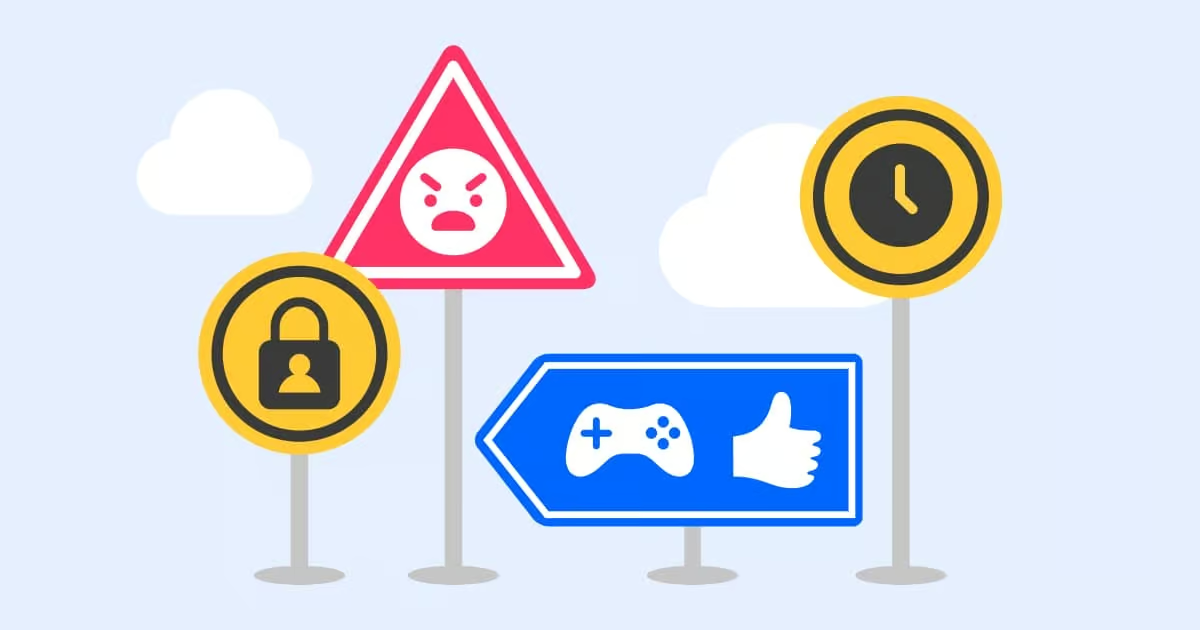
Online critical thinking guide

Fake news & misinformation hub

Finding the Truth
The Tool Takeover
 Close video
Close video
Close video
Close video
Close video
Close video
Close video
Close video
Close video
