
Help 9-11-year-olds understand the risks and consequences of image-sharing with Picture the Consequence, a new lesson from Digital Matters.
In this article
- Why teaching the risks of nude image-sharing is important
- How you can teach the issue in an age-appropriate way
- Exploring ‘Picture the Consequence’ from Digital Matters
- Resources to support understanding of nude image-sharing
Why teaching the risks of nude image-sharing is important
In 2023, the Internet Watch Foundation’s data revealed that 92% of child sexual abuse material removed from the internet was ‘self-generated’. This means that children shared photos and videos of themselves. This includes cases where peers or adults coerced children into sharing these images.
The data above also revealed that children aged 11-13 made up two-thirds of total cases of self-generated sexual imagery in 2022. This means that as children enter secondary school, they might already face the pressures and risks of sharing nude images of themselves or others.
In focus groups held with 11-17-year-olds, we learned that children face several barriers when it comes to effective education around this topic. This includes receiving no specific education on the issue or only receiving superficial coverage.
To prevent children from sharing nude images of themselves in relationships or under coercion of adults, it’s important to address the behaviours early.
How you can teach the issue in an age-appropriate way
The focus groups highlighted the importance of addressing specific behaviours associated with nude image-sharing. These included:
- Addressing healthy relationships
- Withstanding pressure from negative attention
- Addressing harmful behaviour from perpetrators
- Moral and legal consequences of pressuring and sharing nude images.
So, in upper primary, teachers and parents/carers can focus on addressing the behaviour rather than the content. Exploring the pressures that boys and girls might feel and what the consequences of sharing an image might be are both good places to start.
Exploring ‘Picture the Consequence’ from Digital Matters
In July 2025, we ran a competition for children in Years 5 and 6 (or equivalent) across the UK for the next online safety champion on Digital Matters, our free platform for teaching online safety. Students had to create a unique character that would feature in our next lesson’s Once Upon Online story. In addition to creating someone unique, students also had to show good understanding of online safety.

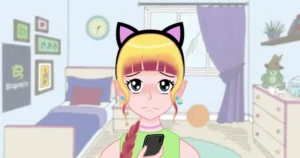
The winner, Ameya from Lent Rise School, created Kitty – a 13-year-old gamer who lives with her mum and brother. It’s this character which features in the new image-sharing story, ‘A Photo Too Far’.
What the lesson looks like
The lesson, called Picture the Consequence, uses quiz- and discussion-based learning to address the behaviours around nude image-sharing by using age-appropriate examples of pressures children might face and how we lose control of an image once it’s shared.
Both teachers and parents can access companion guides to support their understanding and children’s education of the topic.
Applying students’ learning
Following the quiz and discussion to learn about image-sharing in the classroom, children then apply their knowledge either at school or at home with the interactive story.

Using what they’ve learned, students must help Kitty make choices when it comes to sharing images of her costume for the Dragoncry Convention. Can children help Kitty reach a positive and supportive outcome?
Students’ learning outcomes
Throughout the lesson and story, children learn what can happen after images are shared and what they can do if a situation gets out of control. This can help them understand what actions they can take if ever faced with similar image-sharing pressures online.
Teachers can download the lesson materials for free by logging in or signing up to Digital Matters.