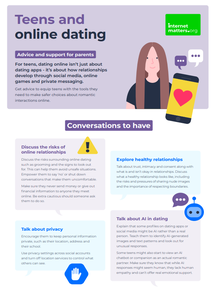
Is your teen dating someone online?
Take a look at 10 useful tips for parents to help teens make safer choices when it comes to dating online.

What’s on this page
Quick tips
Follow these quick tips to help your teen navigate online relationships and dating safely.
Use privacy settings
Help your teen set up their accounts to limit who can contact them. Encourage them to only accept friend requests from people they know.
Keep information private
Encourage your teen to stick to conversation topics about hobbies and interests without giving away private information that can identify their location.
Talk regularly
Have regular conversations with your teen about who they talk to online. Ask them about dating and relationships… even if it feels awkward.
Top tips to support your teen
Here are ten tips to equip teens with the tools they need to make safer choices about who they interact with romantically online.
Discuss the risks
Not everyone your teen meets online will have the right intentions. So, it’s important to discuss the risks surrounding online dating such as online grooming and sextortion.
Explore what signs to look out for to avoid putting themselves in unsafe situations. Additionally, empower them to say ‘no’ or shut down conversations when they feel uncomfortable.

Help them protect their identity
Keeping certain personal information private such as their location, address and where they attend school or college is important.
Use the right privacy settings across all their social accounts can help them stay on top of what information is available for everyone to see.
TIP: Doing a search of their name with a search engine like Google is a simple way of checking out what information about them exists online.
Talk about healthy relationships and behaviour
- Talk with them about trust, sex and intimacy, and the appropriate behaviours for them and their partner. This will help ensure they stay balanced when coming across things that are false or misleading.
- Discuss tech dangers. Sometimes teens are tempted to send nude photos . Unfortunately, there have been cases where these pictures have become public.
- Make sure they understand they have the right to say no and that anyone who cares about them should respect that.
Agree on boundaries
Help your teen learn skills that build up their critical thinking and digital resilience when it comes to exploring dating online:
- Create a space where they feel able to talk openly about their digital life.
- Encourage them to share details with you about potential dates – to stay engaged provide your support.
- Remind them not to meet up with online friends alone. If they do, it should be with a trusted adult and in a public place.
- Sexual communication with a child is a criminal offence. Make sure your child knows that adults who want to talk about sex are doing something wrong and should be reported.
What to do if something feels wrong
If your teen has a negative experience with someone online or suspects that they are seeking to do harm, these tips can help you support them.
Be reassuring
If your child tells you they’ve been interacting with someone online who they think may be harmful, your first reaction might be to lecture them about not doing it in future. However, this can cause your child to feel punished and less likely to share any issues in future. Instead, thank them for telling you, and reassure them that you will support them.
Report and block
Show your child how to use the messaging platform’s blocking and reporting tools to prevent further contact. You can also screenshot the messages as evidence of harmful behaviour, which can be useful if you need to escalate the issue.
Contact the authorities if necessary
If you suspect someone was trying to groom your child, you should report it to the police. Taking screenshots of the chat will provide proof of the attempted crime.
Continue checking in
Once you have handled the issue, continue checking in with your child about who they are interacting with online. This will allow you to react if they are contacted by a harmful person in future.
Starting a conversation
Children might find it hard to talk about their dating life with a parent. They might feel embarrassed about romantic interactions or worry that they will be told to stop. However, these conversations can help you learn who your child is talking to and what apps they’re using, and gives you a chance to equip them with the necessary skills to handle these interactions safely.
Here are some quick conversation starters to help you begin talking about dating with your child.
This question avoids feeling intrusive by focusing on other teens rather than your child’s own dating life. This can make them more comfortable sharing openly. Its open-ended nature also encourages a more detailed response, rather than a yes or no answer.
This open-ended question encourages children to give detailed answers, while avoiding pressure to talk about their own dating life. It will also make children consider online safety and gives you an opportunity to discuss catfishing and fake profiles.
Posing this as a hypothetical question helps it avoid feeling like an interrogation. Instead, it empowers children to think about how they could react to a risk. It also opens up further conversation about the differences between healthy and unhealthy relationships.
This open-ended, hypothetical question encourages a detailed response without assuming your child is engaging in any risky behaviour. It naturally leads into a conversation about boundaries, consent and the risks of sharing personal photos online.
Download the full guide