
Our digital wellbeing research programme

The Digital Wellbeing Index tracks how experiences of the online world impacts children. These insights help families, educators, industry and Government to make effective and supportive changes.
Children’s Wellbeing in a Digital World Index
The digital world is a key part of children’s lives and has both positive and negative impacts. Our Digital Wellbeing Index research highlights what these impacts may be so we can help families, educators, industry and Government make the online world as safe as it can be for children and the most vulnerable.
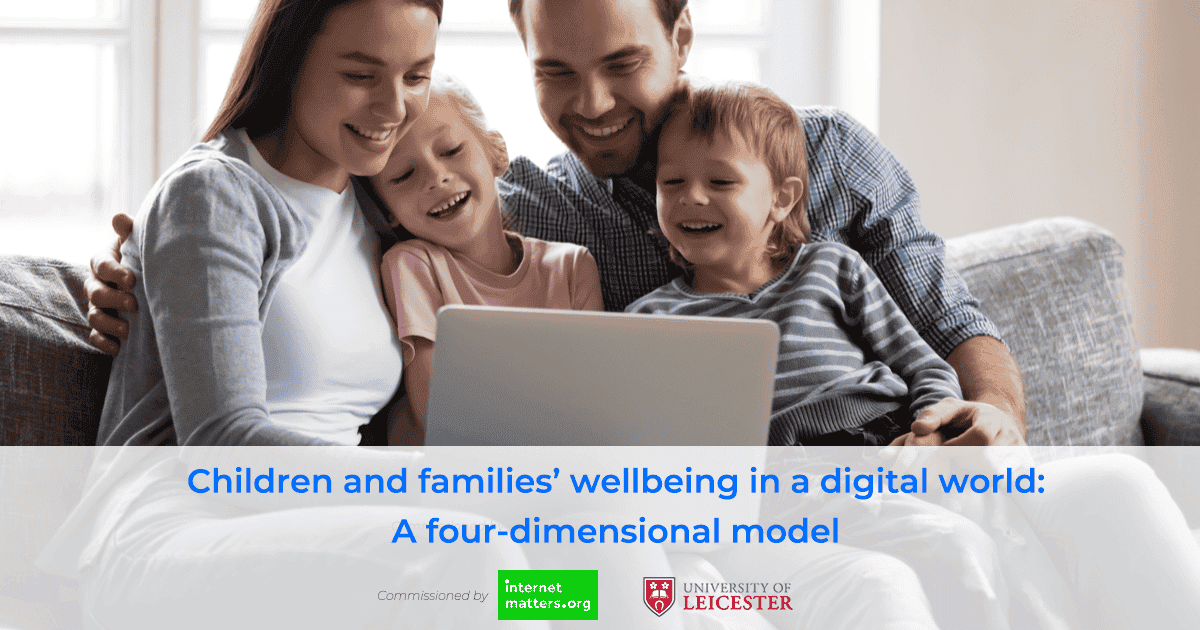
While many ways exist to measure and define wellbeing, our Index follows a four-dimensional model developed in collaboration with the University of Leicester. This model draws on broader literature and conversations with many people within different sectors. The four models are developmental, emotional, physical and social wellbeing.
The four-dimensional model
- Developmental: cognitive ability, achievement in education, managing financial responsibility with maturation, personal growth
- Emotional: healthy emotional and spiritual development, the ability to cope with stress and setbacks, development of values and a positive outlook, space and opportunities to flourish; life purpose; autonomy; feeling successful.
- Physical: achieving and maintaining health, developing physical capabilities, using tech in physical safety, and amount of necessary access to supportive or accessibility tech.
- Social: participation in the community, being an active citizen, working with others, healthy online interactions, positive and sustainable online personae, managing risks, good relationships online and off, and communication.
Children’s Wellbeing in a Digital World takes responses from an annual household survey that asks questions to both parents and children.
The Index helps to track changes in children’s online experiences year-on-year. Its findings highlight important opportunities to support all children and help them flourish in a digital world.
Supporting children’s online safety
Research from the Index emphasises the importance of supportive home environments and offers insights into the digital tools needed to help manage children’s wellbeing. Importantly, it highlights the areas in which children’s wellbeing might be most affected, including as they relate to children with vulnerabilities.
The Digital Wellbeing Index helps guide Internet Matters’ creation of resources and tools to support parents, carers and educators. Moreover, those creating digital products, setting policy agendas or educating and caring for children can also use these findings to make informed decisions on how to best support them.

Support children's wellbeing
Get tailored advice for your child's interests and habits with My Family's Digital Toolkit.
Explore the latest research
Year 5 of the Children’s Digital Wellbeing Index saw that, overall, children are spending more time on devices, sometimes in place of offline interactions.
Children now spend 23 hours a week online, up from 16 hours in 2022. They are engaging more actively, with two-thirds of children creating content to post online.
Several positive measures of wellbeing have increased over the past four years. For example, 83% of children say being online is important for staying in contact with friends or family (up from 77% in 2022).
46% of children report that they keep playing the same games or watching the same shows or films even when they are not enjoying them. 40% are turning down real-world social opportunities to stay online.
Half of all parents are now using parental controls, an increase from 43% three years ago. They are also more likely to use tools to limit their child’s screen time (up to 31% from 18%).

Explore our qualitative research
Our wellbeing research regularly uncovers interesting trends that we dive into more deeply.



Past digital wellbeing research
Explore our past Indexes to track trends in digital wellbeing over the years.

Digital Wellbeing Index report 2025

Digital Wellbeing Index report 2024

Digital Wellbeing Index report 2023

Digital Wellbeing Index report 2022
Wellbeing in a digital world 2021
 Close video
Close video
Close video
Close video
Close video
Close video
Close video
Close video
Close video
Discover more in our work and impact
Learn about how our work is making a difference in children’s lives online and how you can get involved to help us do more.
Policy and research
Explore this section to learn more about parents' and children's views on key online safety issues and our stance on various online safety policies.
Get involved
Would you like to play an active role to help us keep children safe online? See how you can support us today.